Capilano Suspension Bridge: the complete visitor guide
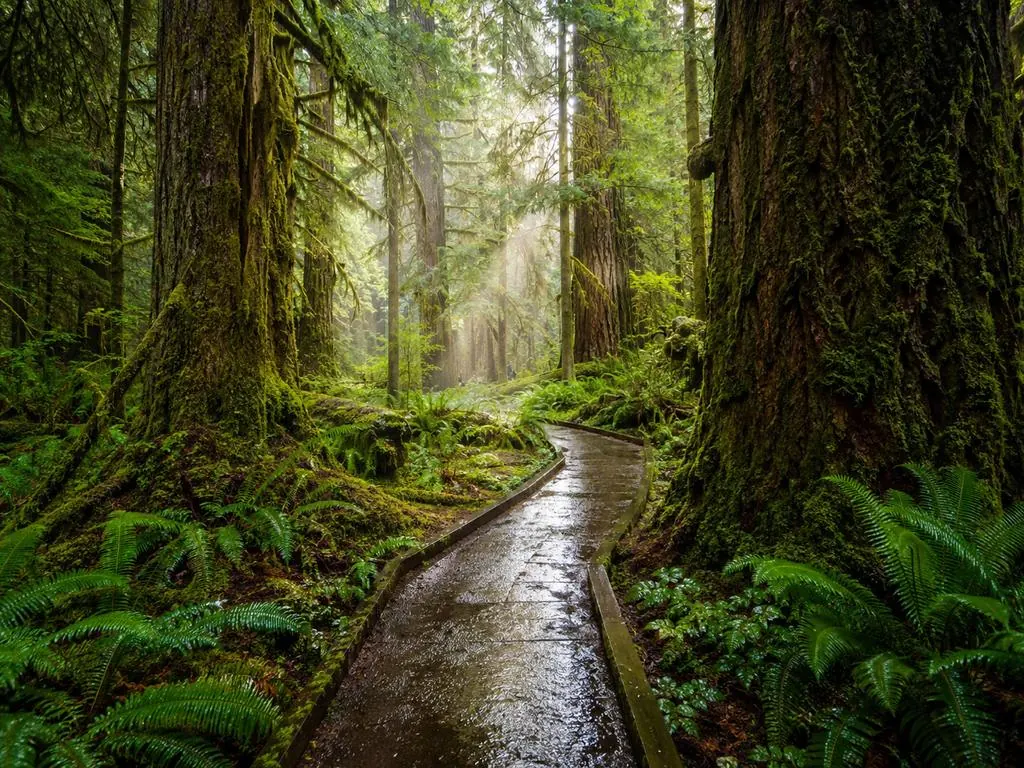
I spent four summers working inside this park as a seasonal interpreter, and I have walked the canyon in every month of the year since. In that time the adult gate price has climbed to CAD $76.95, and the question I am asked most often is not how the bridge was built. It is whether to pay at all. This is the answer I would give you on the trail.
An 1889 bridge made of hemp rope
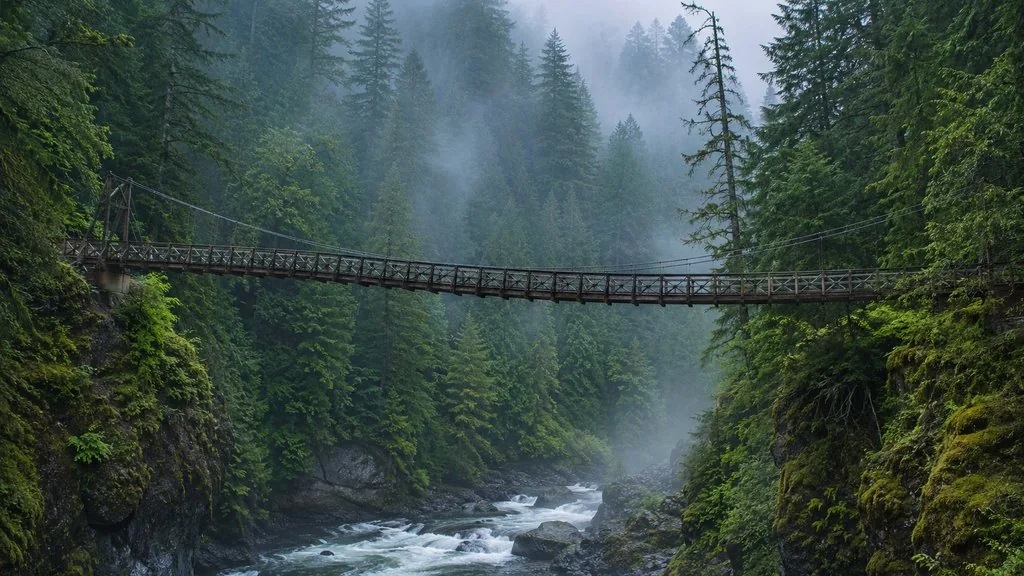
George Grant Mackay, a Scottish civil engineer and Vancouver park commissioner, bought land on both sides of the Capilano canyon and strung the first crossing over it in 1889. It was hemp rope with a cedar plank deck, which tells you most of what you need to know about the nerve of the people who used it. Wire cable replaced the rope in 1903, and the bridge was rebuilt outright in 1956, which is essentially the structure you walk on today: 137 m (450 ft) across, 70 m (230 ft) above the water.
The land changed hands several times after Mackay — Edward Mahon in 1910, “Mac” MacEachran in 1935, who brought in the totem poles, Henri Aubeneau in 1945 — and since 1983 it has been owned by Nancy Stibbard. The name comes from Kia’palano, a Squamish word; the park’s Indigenous culture exhibit carries that name. Over 1.2 million people now come through the gate each year, which is worth holding in mind when you picture a quiet forest walk.
Three engineered walks, not one
The bridge alone takes five to fifteen minutes, and if that were the whole park the price would be indefensible. It is not. Treetops Adventure opened in May 2004: seven suspended footbridges running between old-growth Douglas firs on platforms up to 33 m (110 ft) above the forest floor, fifteen to twenty minutes to walk. Cliffwalk followed in June 2011 — a cantilevered walkway 213 m (700 ft) long, pinned to the rock about thirty storeys above the canyon, and the part that unsettles people most. Allow fifteen to thirty minutes for it.
Around those three you get the Living Forest exhibit, the Story Centre with photographs and artefacts from 1889 onward, Kia’palano, and Raptors Ridge with its falcons and owls from late May to September. Free guided talks run year-round, with the schedule posted at the entrance, and they are the best thing in the park that nobody plans for. All of it sits on 1.8 km of paved stone path and boardwalk, so most guests are inside for two to three hours, four if they take their time.
What CAD $76.95 actually buys
An adult 18–64 pays CAD $76.95 at the gate. A senior 65+ pays CAD $71.95, a youth 13–17 CAD $49.95, a child 6–12 CAD $29.95, and children five and under are free, issued on arrival. Anyone under 15 needs an adult with them. That single price covers every walk and exhibit above. Food is the exception: all the dining is inside the park, the Cliff House takes no reservations, and you may bring small snacks and water.
Two things before you pay. The park recommends buying a timed-entry ticket online rather than queuing, and it is open every day of the year except 25 December. And the answer to the question BC residents keep asking is no — Capilano is not free for them. Residents can upgrade a ticket to an Annual Pass, which gives a year of admission plus dining and retail discounts, but passholders still have to reserve a timed entry, and there are a limited number of those per hour during peak events.
The free bridge people are really asking about
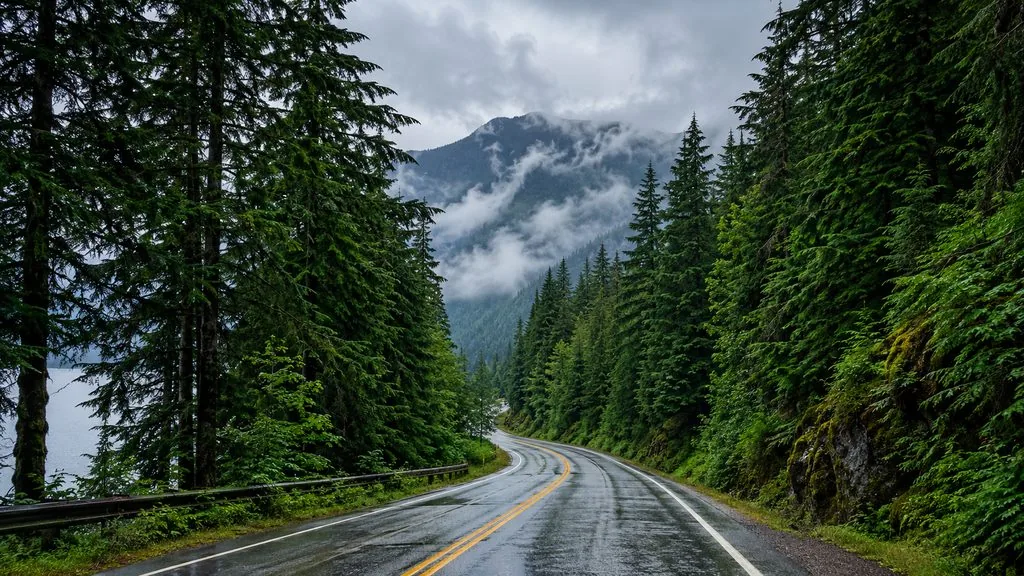
Lynn Canyon Suspension Bridge, a few minutes away in the District of North Vancouver, was built in 1912, hangs 50 m above the canyon floor and costs nothing. It began as a toll bridge and became free when it passed into public hands. It has swimming holes, forest trails and no queue. What it does not have is Treetops Adventure, the Cliffwalk, Raptors Ridge, the Story Centre, 1.8 km of boardwalk or a free downtown shuttle.
So the split is clean. If you have a car and a tight budget, Lynn Canyon is the better day and I will not pretend otherwise; I have written it up properly on our free alternative page. If you want the three engineered walks and the interpretive programme on one ticket, fifteen minutes from downtown, Capilano is the only place that assembles them.
Getting there without a car
The park is at 3735 Capilano Road, roughly fifteen minutes’ drive from downtown. A seasonal free shuttle runs from Canada Place, the Hyatt Regency and the Blue Horizon Hotel, and you need proof of admission for the return trip. On transit, take the SeaBus from Waterfront Station to Lonsdale Quay and then bus #236, or the #246 from Granville or Burrard and walk north up Capilano Road. Driving costs CAD $9.00 for three hours at credit-card-only meters; a rideshare from downtown runs about CAD $25–30. When the shuttle is not running, a combo tour is what solves the transport problem, and it is the only thing that links Capilano to Grouse Mountain in one day.
One last thing about the swaying
In 1974 two psychologists ran an experiment on this bridge that became a standard textbook reference: men who had just crossed the swaying deck were far more likely to read their own racing heart as attraction to the researcher waiting at the other end. Misattribution of arousal, in the literature. Standing on the deck at 70 m with the planks shifting under you, it is an easy finding to believe.
Ready to book a timed entry?
Admission on its own is the cheapest way in if you can get yourself to Capilano Road. If you cannot, a combo tour carries the transport and the ticket together. Either way, book the entry time before you travel — the park recommends it, and in July it is the difference between walking in and waiting.
Frequently asked questions
How old is the Capilano Suspension Bridge?
The first bridge was strung across the canyon in 1889 by George Grant Mackay, a Scottish civil engineer and Vancouver park commissioner, using hemp rope and a cedar plank deck. Wire cable replaced the rope in 1903 and the bridge was rebuilt completely in 1956. The crossing you walk today is that 1956 structure. More on the walk itself in what to expect inside the park.
Why is the Capilano Suspension Bridge famous?
Partly age — it has been a paying attraction since 1889 — and partly scale: 137 m of moving deck, 70 m above a river, with the Cliffwalk and Treetops Adventure added in 2011 and 2004. Over 1.2 million people a year now come through. Whether that justifies the ticket is a separate question, and I answer it on is it worth the money.
Do I need to buy Capilano tickets in advance?
The park recommends buying a timed entry online rather than queuing at the gate, and even annual passholders have to reserve a slot, with a limited number available each hour during peak events. In summer I would book. See what the ticket costs and which hours are quietest.